

Overview
I served as the Project Leader for an intensive entrepreneurial course project, where we were tasked with launching a fully functional e-commerce MVP within a 3-month deadline. As the project lead, I coordinated a multicultural team with diverse skill sets, fostering collaboration across UX design, development, branding, and marketing to successfully bring the project to life.
The result was Reboot, a modern e-commerce dedicated to empowering health-conscious, on-the-go users. Our flagship product, a portable blender, is part of a handpicked range of portable gadgets designed to support healthier lifestyles.
🎉 Achievement:
Our team was awarded Top Performing Project, securing additional funding!
Skills & Tools
- Agile Methodologies
- WordPress + API Integration
- Figma
- Market Research
Constraints
- Timeline: Apr – Jun 2023 (3 Months)
- Scope: Development of an E-Commerce Minimum Viable Product (MVP)
The Agile Approach
Sprint Structure:
We delivered the project through 4 sprints of 2-3 weeks each (with 1 week of discovery phase).


Sprint 1: Branding & Initial UX Concepts
- Logo and brand identity
- Mid-fidelity proto (homepage, product pages)
- Moodboards and style tiles
Sprint 2: WordPress Integration
-
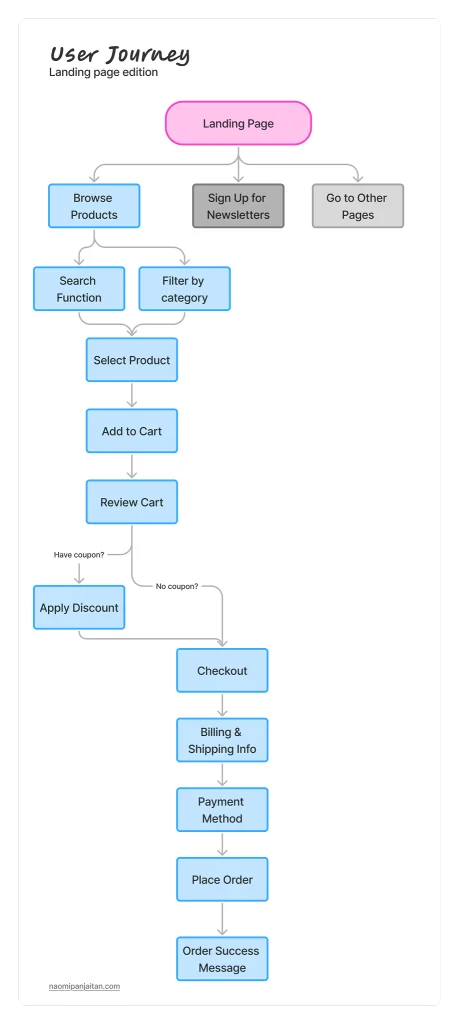
Designed detailed user flows covering browsing, product filtering, and checkout processes.
-
Integrated prototypes into WordPress (theme setup, key plugins like WooCommerce and Mailchimp).
Sprint 3: Site Optimization & Marketing
-
Mobile responsiveness testing
-
High-fidelity UI components (product cards, CTAs)
-
Facebook Ads mockups & landing pages
-
UX copywriting for banners and CTAs
Sprint 4: Final Pitch Prep
-
Final QA checks (mobile & desktop)
-
Slide deck preparation for pitch

Final Goal
Deliver a fully-functioning MVP (e-commerce website) with integrated marketing communications, ready for the final pitch.
Members, Role, Workload
 Naomi (Project Leader) 🇮🇩;Jenna 🇺🇸; Pitchaya 🇹🇭; Josephine 🇮🇩; Minakshi 🇳🇵; Arnold 🇮🇩
Note: The roles and workload distribution were initially based on voluntary self-selection + individual interest match. The list below is the finalized contribution log reflecting actual responsibilities and tasks completed by each member.
*Equal contribution
***
UX Designers
-
Customer journey mapping
-
Wireframes (low to mid-fidelity)
-
User flows (e.g., navigation, checkout)
-
Usability testing (prototype validation)
-
Information Architecture (IA)

UI Designer
-
Visual design (high-fidelity mockups)
-
Style guides (typography, color palettes, iconography)
-
Visual assets for the website and ads
-
Handoff to WordPress developers (via Figma or similar)
**
WordPress Developer
-
Website setup and theme customization
-
Frontend development (HTML/CSS in WordPress, page builder tweaks)
-
Backend configuration (payment gateway, etc.)
-
Mobile responsiveness optimization
-
Troubleshooting technical issues



Market Researcher
-
Niche and competitor analysis (direct, indirect, substitute)
-
Customer persona development
-
Market trends report (Google Trends, Ubersuggest)
-
Survey & data collection (customer willingness to pay, etc.)
Marketing
-
Campaign planning (social media, Facebook Ads)
-
Ad creatives coordination (working with UI designers)
-
Blog & newsletter strategies
-
Social media management (Instagram, Facebook, YouTube)
-
Analytics review (CTR, CPC, campaign adjustments)
Branding
-
Brand positioning and value proposition creation
-
Tone of voice definition (for web copy, ads, newsletters)
-
Logo design oversight
- Creating slide deck for our pitching days
Discovery Phase (Sprint 0)
The market research team (,,,) initiated the project with a discovery phase focused on defining the niche and business strategy. I supported this phase by documenting key insights and decisions.
Niche Selection
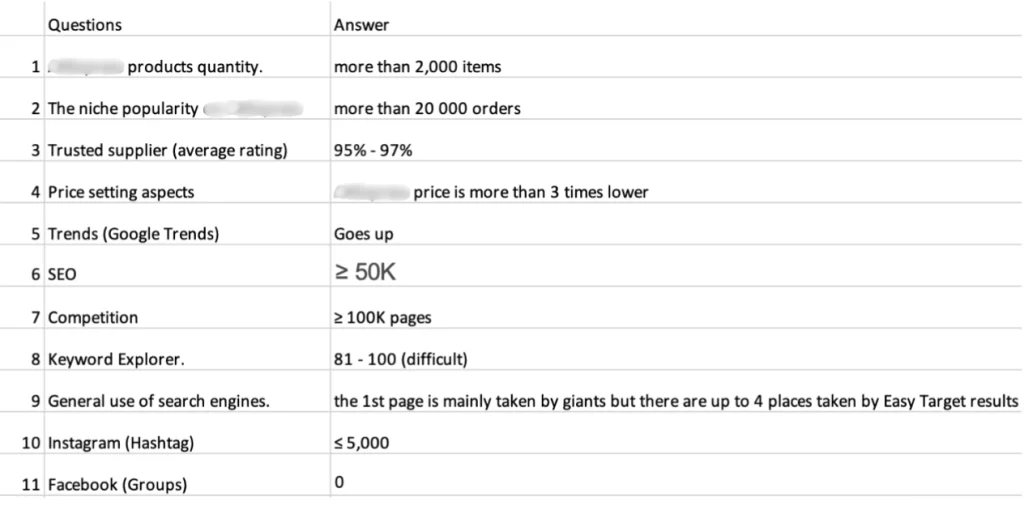
- We shared a common passion for fitness and wellness, leading us to target busy individuals who value convenience and an active lifestyle.
- We chose portable health gadgets—also known as active lifestyle tech—as our niche, supported by positive market trends and pricing advantages.
- Despite high SEO competition, untapped opportunities remain on platforms like Instagram and Facebook.
Star Product Selection
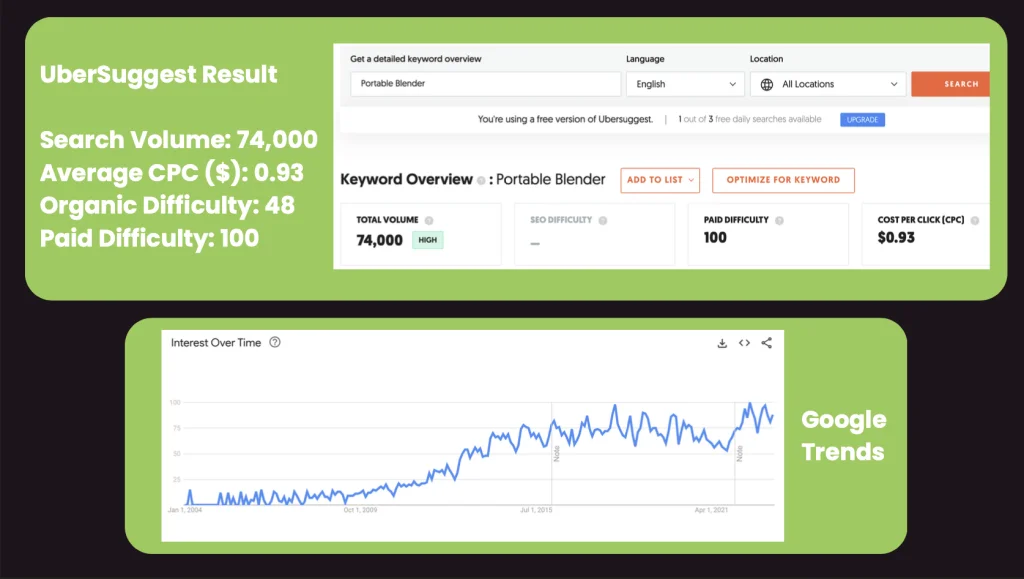
We selected the portable blender as our star product due to its high market demand (74,000 monthly searches), affordability, and strong fit with our target audience’s need for mobility and wellness. It also positions us for future expansion into related portable kitchen and fitness products.
Competitor Analysis
We identified three types of competitors in the portable blender niche:
-
Direct Competitors – Brands specializing in portable blenders:
e.g., BlendJet, Fresh Juice, PopBabies
-
Indirect Competitors – Large e-commerce platforms with portable blenders as part of a wider catalog:
e.g., Amazon or SHEIN
-
Substitute Competitors – Brands offering alternative solutions to the same health and convenience needs:
e.g., Panasonic (kitchen appliances) or Honey’s Bar (juice bars)
While direct competitors focus on single-product branding and indirect competitors provide a broad range, we identified a gap: a one-stop shop for portable health and wellness gadgets. By curating a collection of complementary portable products, we can stand out by addressing multiple customer needs under one brand.
Market Survey
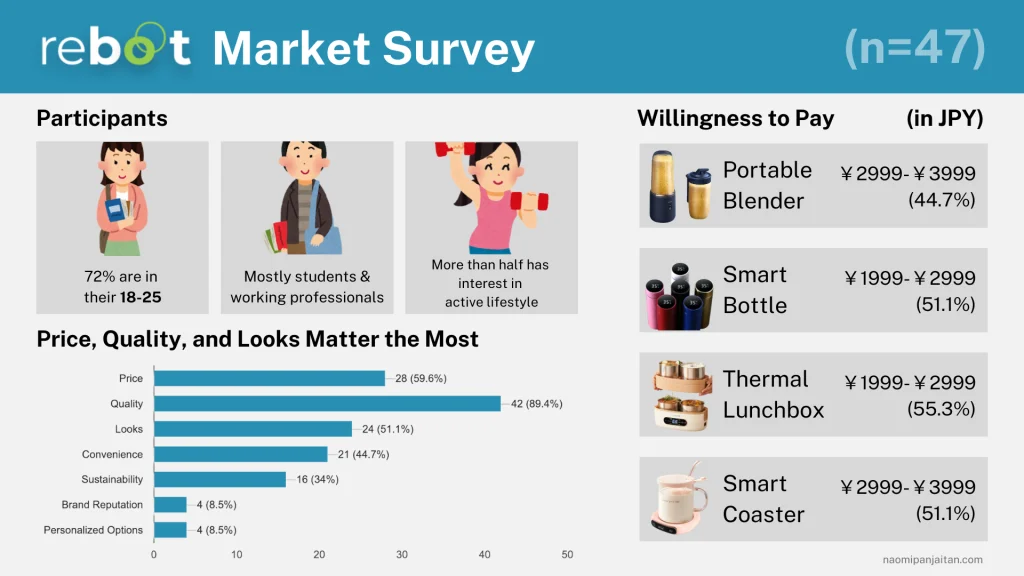
The survey (n=47) revealed that the majority of participants are 18-25 years old, primarily students and young professionals, with over 50% showing an interest in active lifestyles.
Key decision factors identified: Quality (89.4%), Price (59.6%), and Looks (51.1%), followed by convenience and sustainability.
The willingness to pay indicates that most respondents are comfortable spending ¥1,999 – ¥3,999 JPY, depending on the product type.
Target Market Persona
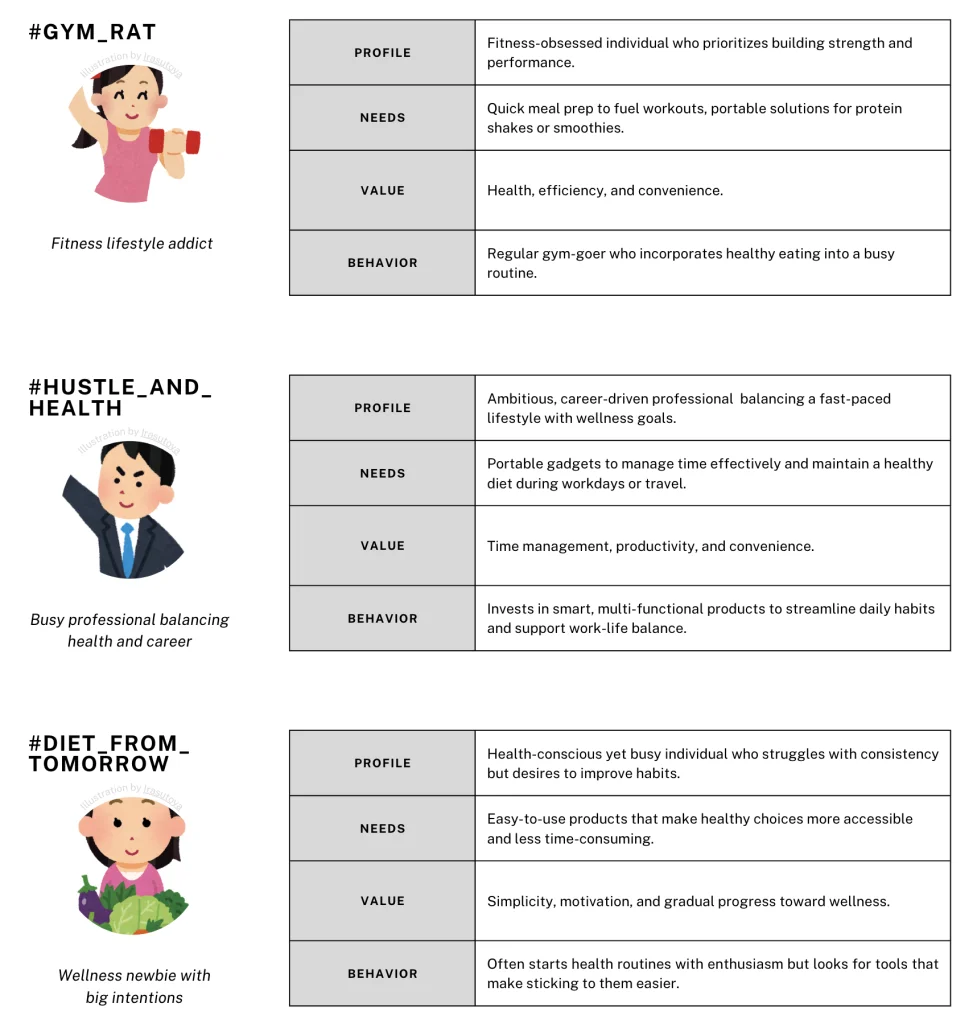
Based on the previous market survey, we developed target market personas to shape our brand identity and inform user experience design.
Sprint 1: Branding & Initial UX Concepts
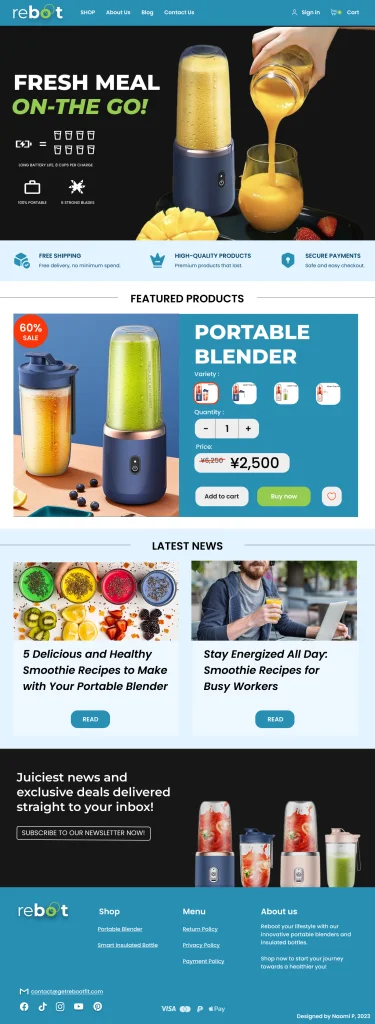
Building on the target market personas, we developed a visual identity tailored to their needs and preferences. I () led a sub-team with other 2 members (&) to design the initial Figma prototype (mid to high fidelity), establishing the foundation for information architecture and providing clear direction for the WordPress development phase.
Visual Identity
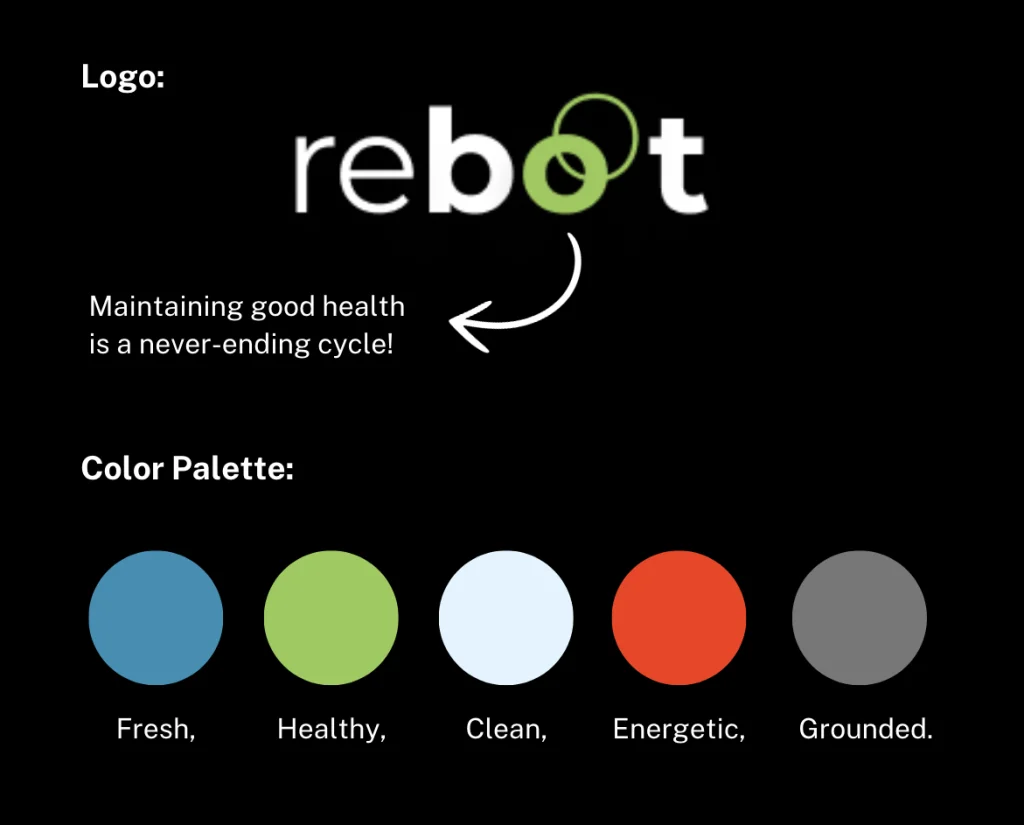
Logo is designed by Josephine, colors are suggested by Jenna
User Journey
Figma prototype
Sprint 2: WordPress Integration
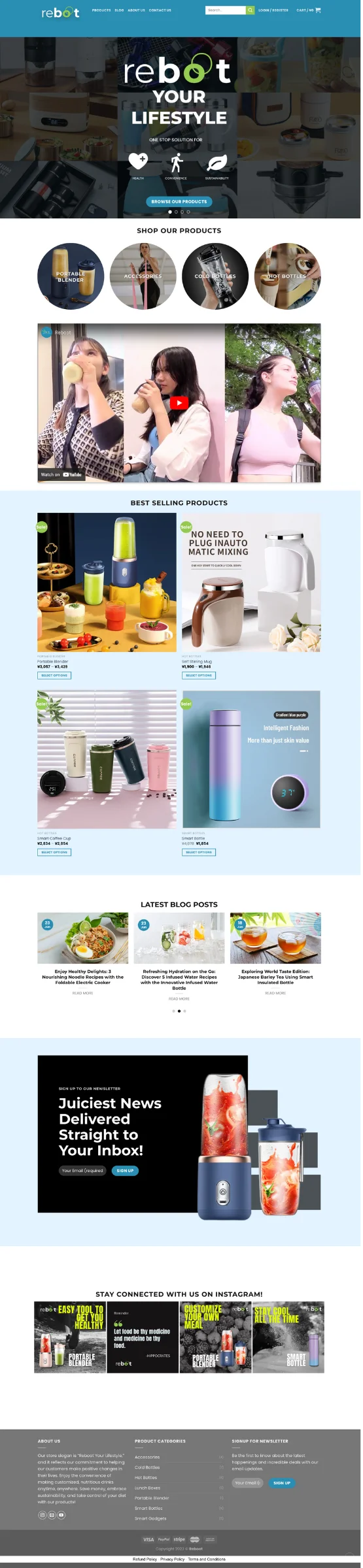
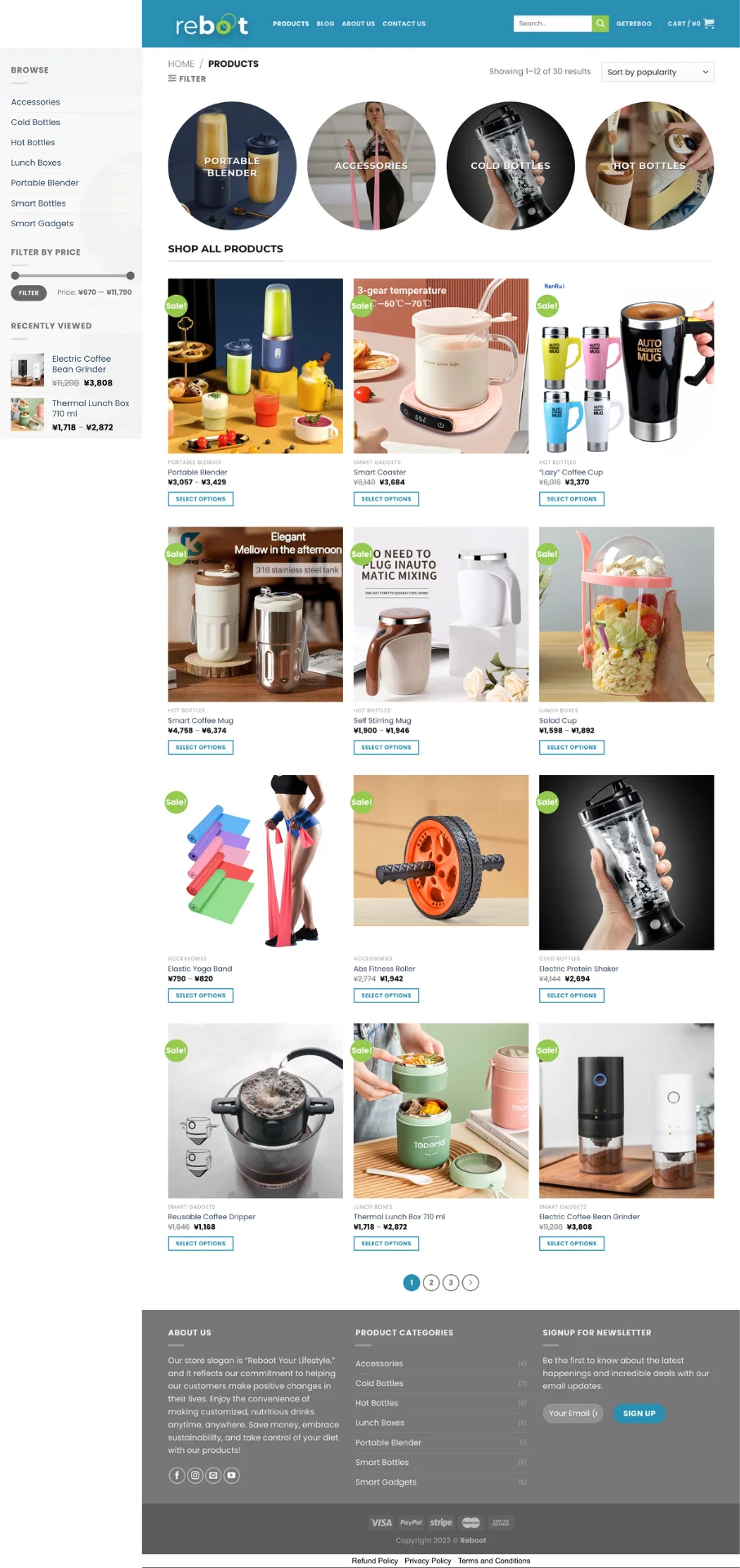
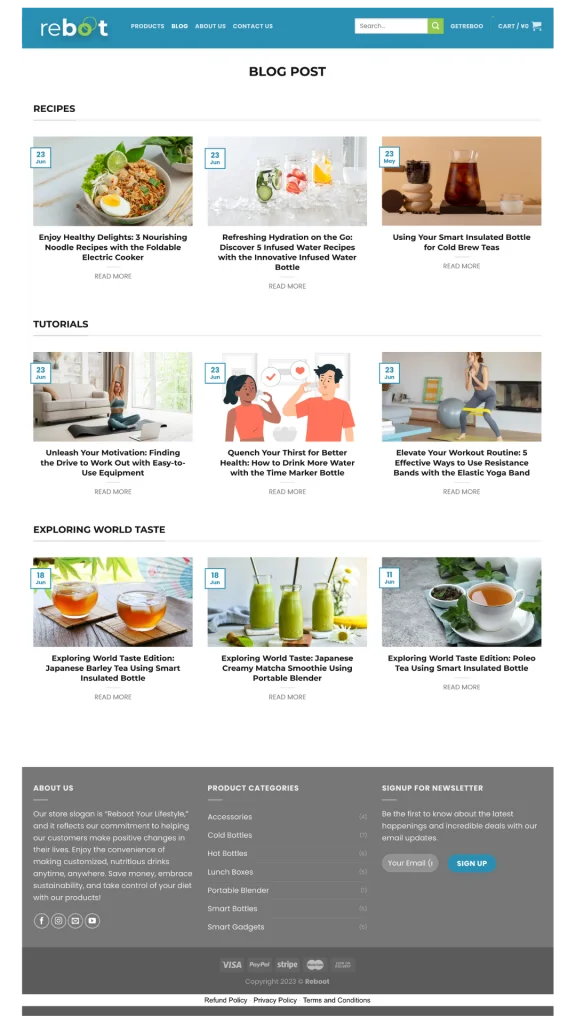
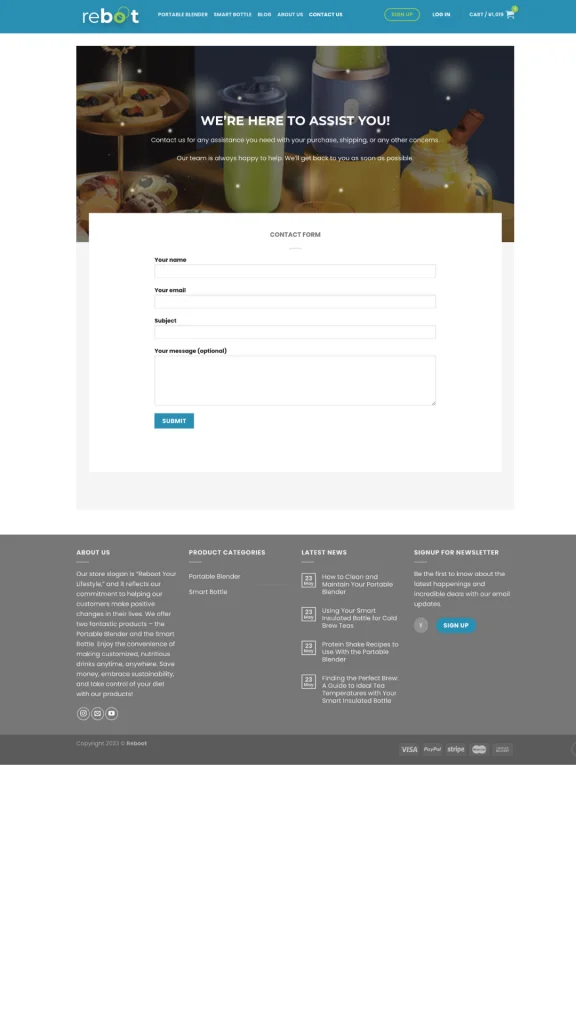
We ( ,& ) began by configuring the essentials: securing the domain name, setting up hosting, and installing the Flatsome theme.
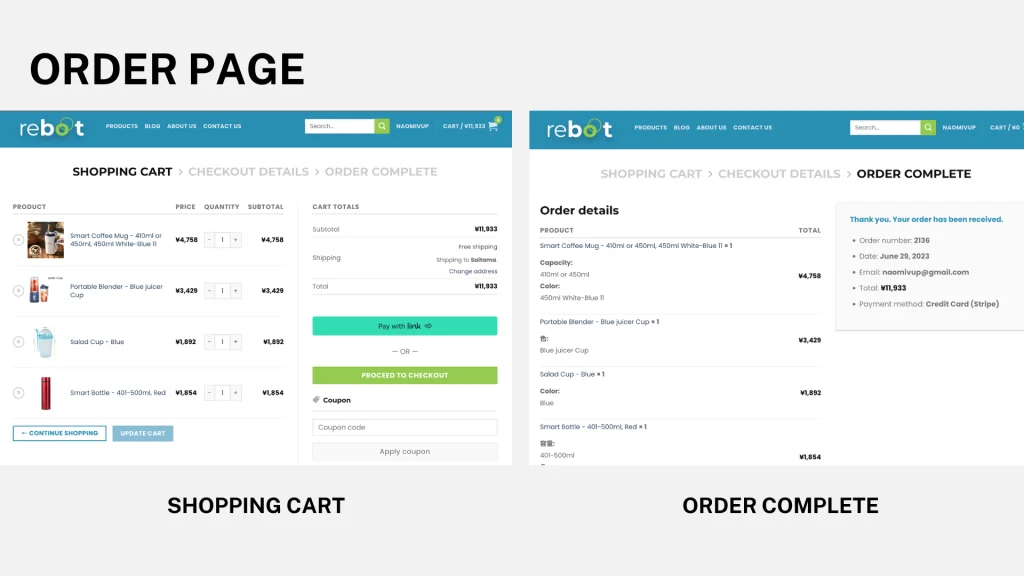
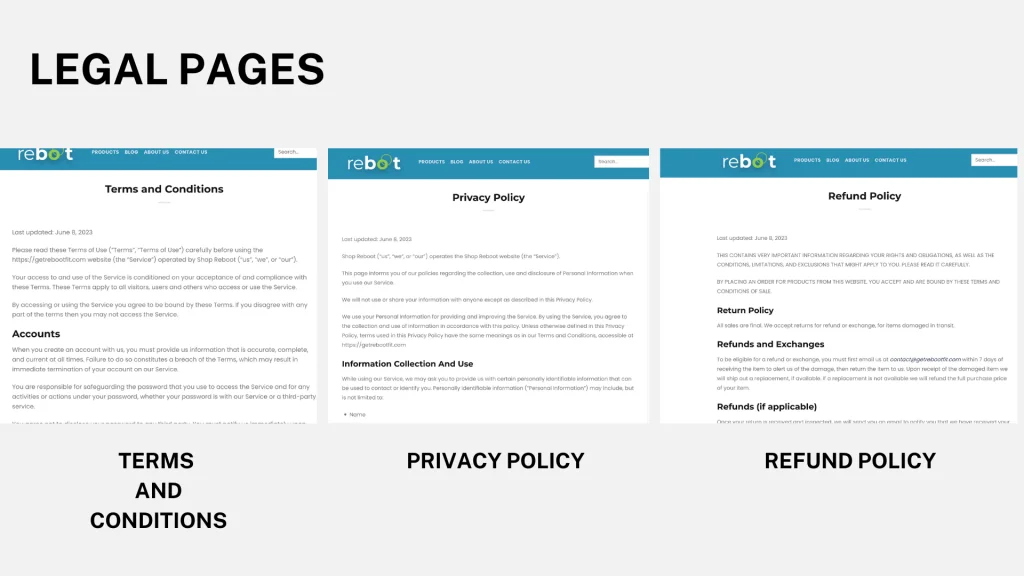
Next, we integrated key plugins, including WooCommerce for e-commerce functionality, MailChimp for newsletters, Contact Form 7 for customer inquiries, and Yoast SEO to enhance search visibility.
Finally, we implemented Stripe API to enable secure online payments.
Screenshots of our site:
Sprint 3: Site Optimization & Marketing
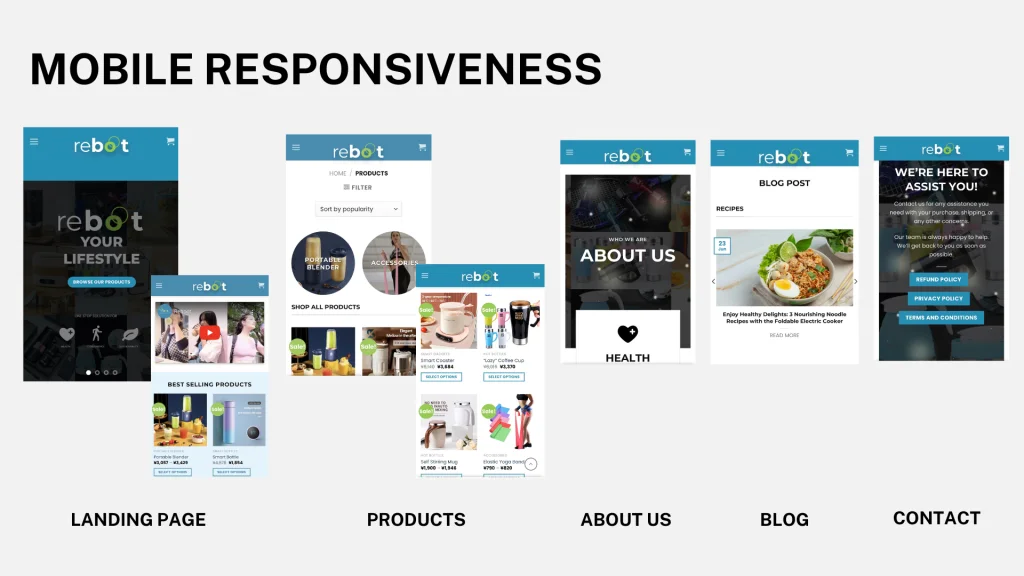
Other members of WordPress development team (&) focused on additional mobile responsiveness site improvement.
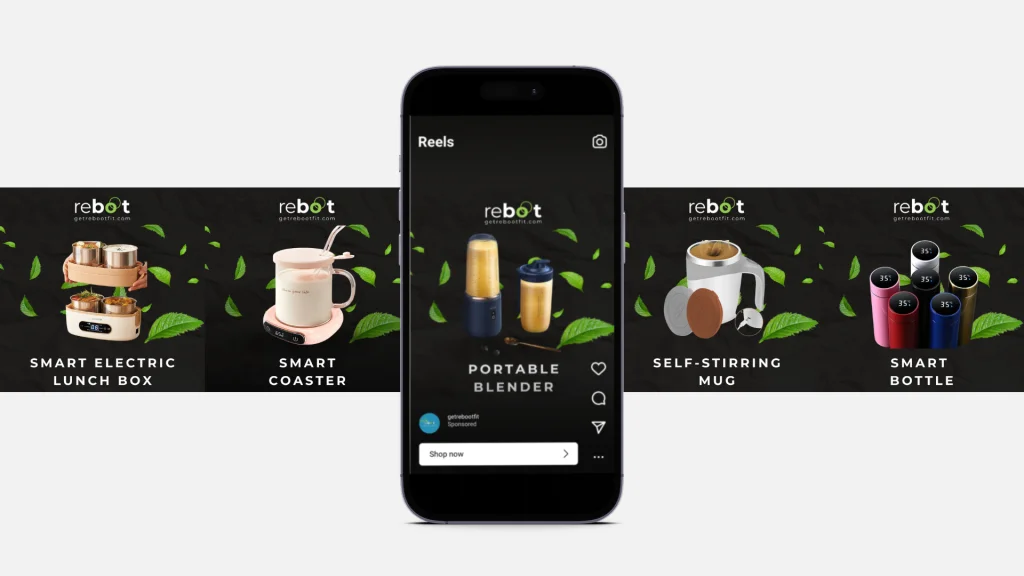
In parallel, we developed Facebook Ads and landing pages tailored for East and Southeast Asian markets.
We strategically scheduled ads between 8–10 AM and 6–9 PM, targeting commuters and users likely to be active on their phones during travel times and post-work hours.
I () was responsible for creating the ad assets, while the marketing team (,&) managed Facebook Ads integration.
Mobile Responsiveness Check
FB ADS
Sprint 4: Final Pitch Preparation
In the final sprint, our focus shifted to delivering a polished MVP and preparing for the final pitch. This involved final QA checks across desktop and mobile devices to ensure functionality and design consistency.
I led the creation and refinement of our team’s pitch deck, clearly presenting our business strategy, market research insights, product features, and branding to stakeholders.
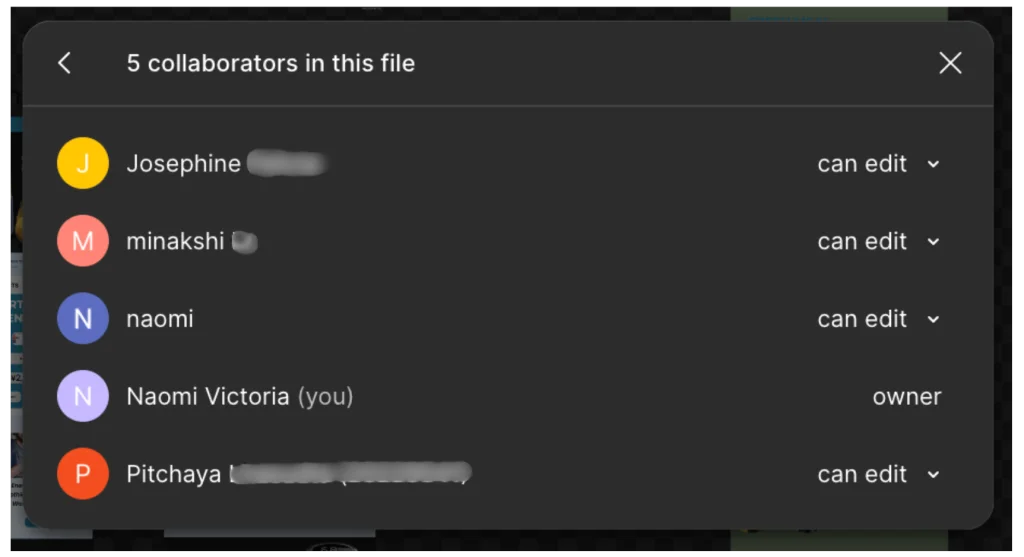
Additionally, to ease earlier team tensions and foster collaboration, I facilitated a Figma knowledge-sharing session, mentoring my teammates on how to use the tool to create graphics and visual assets for both the website and marketing materials.
Conflict Resolution
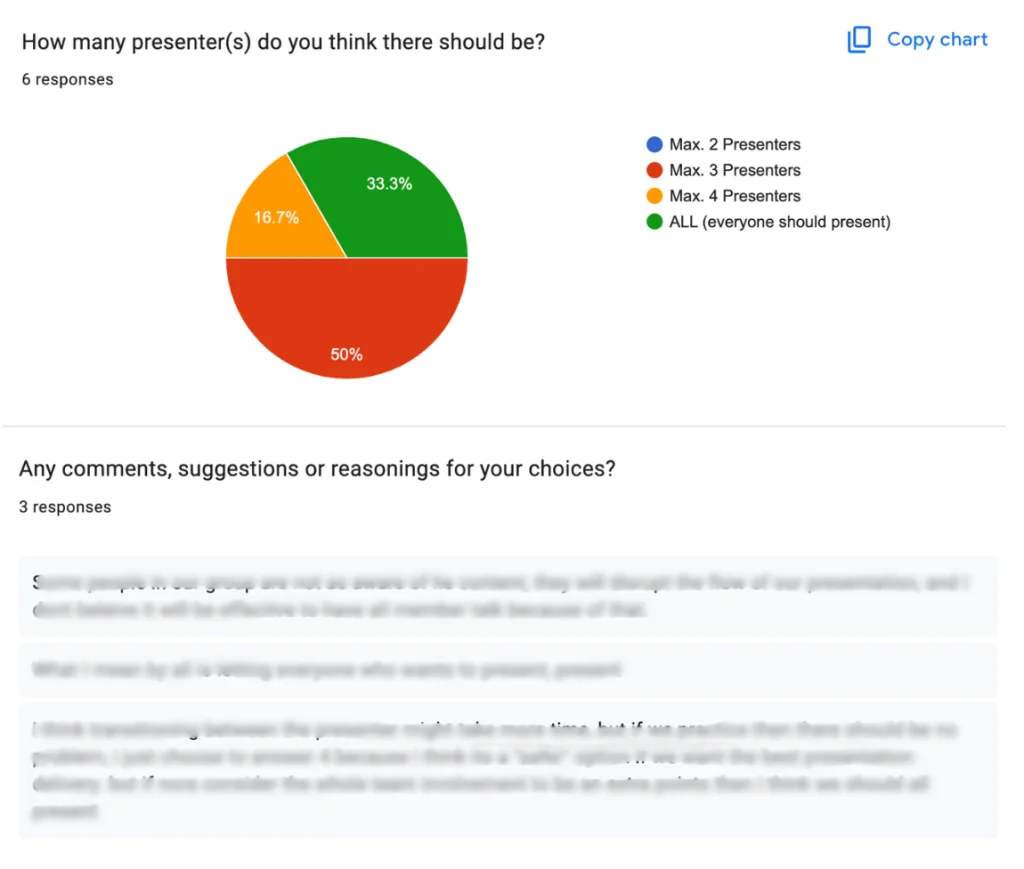
During the project, we faced differing opinions on presentation roles—some members preferred everyone to present for inclusivity, while others felt limiting presenters would ensure a smoother delivery. I first facilitated an open discussion, but the conversation became tense, with some dominating and others hesitant to speak.
To create a fair solution, I launched an anonymous Google Form survey. The results showed a clear divide: half the team preferred three presenters, and three members expressed interest in presenting. Based on this, I announced that three willing members would present, while the rest supported them during rehearsals. Everyone accepted this decision and everything went smooth sailing until the final pitch.
Final Delivery & Reflection
After the final pitch, we were genuinely surprised to find out our project had been selected as the top-performing team. We also received extra funding to continue developing Reboot, which felt like a thoughtful gesture of support.
Leading the “Reboot” project was a challenging yet rewarding experience that strengthened my leadership and adaptability. We had to quickly learn unfamiliar tools like WordPress and Facebook Ads while working under tight deadlines.
This project taught me a lot about leading in uncertainty, staying flexible, and trusting the people I work with. It reminded me that you don’t need all the answers up front—you just need a team that’s willing to figure things out together.
Special thanks to:
Jenna 🇺🇸, Pitchaya 🇹🇭, Josephine 🇮🇩, Minakshi 🇳🇵, Arnold 🇮🇩, and our professors Prof. Nora Sharkasi (Entrepreneurial Strategies) and Prof. Fatih Ozaydin (IT Project Management) for their invaluable support.
